
Sweating during a workout, on a hot afternoon, or before an important presentation is completely normal. But when perspiration soaks through clothing, makes it difficult to grip objects, or occurs without an obvious trigger, it may be more than your body’s usual cooling response. So, what is hyperhidrosis and what can you do about it?
At Essex MedSpa, Dr. Jill Sohayda and her experienced team provide personalized care using advanced treatments designed around each patient’s comfort and goals. As a double board-certified physician with specialized training in neurotoxins and laser skincare, Dr. Sohayda combines medical expertise, patient education, and a thoughtful approach to aesthetic wellness.
Understanding Normal Sweating
Sweating is a natural process that helps regulate body temperature. Your nervous system activates sweat glands when you become overheated due to exercise, warm weather, illness, stress, or certain foods.
Normal perspiration generally improves once the trigger passes. It is usually proportionate to the situation and does not regularly interfere with work, social activities, clothing choices, or daily tasks.
Recognizing Hyperhidrosis
Hyperhidrosis is when people sweat beyond what the body needs for temperature control. It commonly affects the underarms, palms, soles of the feet, face, or scalp. Some people experience symptoms in more than one area.
Possible signs of hyperhidrosis include:
- Sweating heavily when you are not hot or exercising
- Frequently soaking through shirts or other clothing
- Having constantly damp palms or feet
- Avoiding handshakes or social situations
- Struggling to hold tools, papers, or electronic devices
- Developing skin irritation or frequent infections in moist areas
Symptoms often occur on both sides of the body and may begin during childhood or adolescence.
Primary and Secondary Hyperhidrosis
Primary hyperhidrosis typically develops without an underlying medical cause and may run in families. It usually affects specific areas, such as the hands, feet, or underarms.
Secondary hyperhidrosis results from another condition or medication. Hormonal changes, thyroid disorders, diabetes, infections, and certain prescriptions may contribute to widespread or sudden sweating. A medical evaluation is especially important when sweating begins unexpectedly, affects the entire body, or occurs during sleep.
Treatment Can Help Control Excessive Sweating
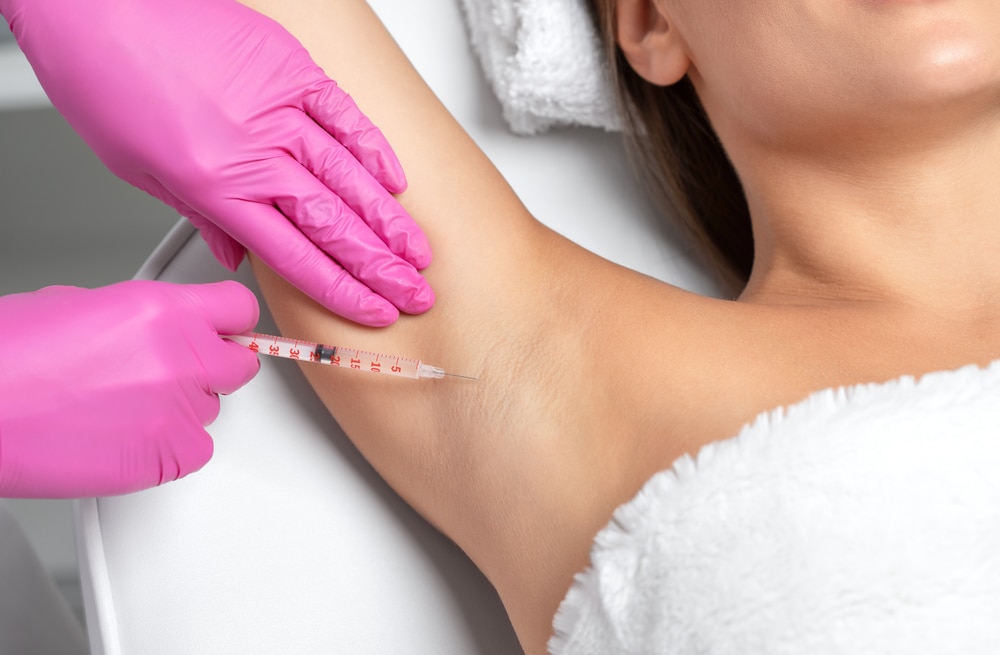
Treatment depends on the affected area and the severity of your symptoms. Options may include prescription-strength antiperspirants, oral medications, iontophoresis, or neurotoxin injections that temporarily reduce signals to the sweat glands.
Feel More Comfortable With Hyperhidrosis Treatment in Littleton, CO
Excessive sweating does not have to dictate what you wear, how you interact with others, or which activities you enjoy. Call 303-973-3683 to schedule a consultation for hyperhidrosis treatment in Littleton, CO.